
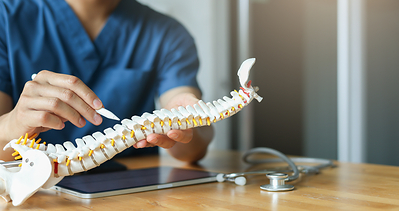
AHMEDABAD, India, Sept. 14, 2026 /PRNewswire/ — Over the past decade, India has witnessed a worrying rise in spine-related problems, not just among the elderly, but increasingly among young adults and teenagers. Spinal health issues are becoming a silent epidemic in the country. According to the World Health Organization (WHO), low back pain is now the leading cause of disability worldwide, and India is no exception.
“A spinal injury can be life-changing but with the right medical care and support from family, most patients are able to return to the lives they had before,” said Dr. Niraj Vasavada, Sr. Spine Surgeon in Ahmedabad with more than two decades of experience in rare and complex surgeries. To address the growing disease burden, Zydus Hospitals in Ahmedabad has built a dedicated, multidisciplinary spine care team backed by advanced surgical technology to handle even the most complex cases. Dr. Hitesh Modi, Sr. Spine Surgeon in Ahmedabad and one of the first PhD-qualified spine surgeons in Western India with 20 years of experience, adds “We strive to combine surgical skill and experience with advances in technology. At Zydus, our focus is on creating a coordinated environment where complex spine procedures can be planned and performed with appropriate expertise, technology, and multidisciplinary support.” The spine team also includes Dr. Prateek Lodha and Dr. Karan Chauhan.
One recent case illustrates the importance of coordinated care in an emergency. A 7-year-old child was rushed to the ER after being hit by a car in his housing society. Dr. Ketan Patel, Head of the Emergency Medicine, stabilised him and alerted the spine team and Dr. Ankit Mehta, Pediatric Intensivist, who then took over.
“The child arrived with multiple wounds across his lower back and was unable to move. We dressed his wounds and reeled him in for a CT scan that confirmed multiple fractures at the L1 level of the vertebra,” said Dr. Niraj. The boy underwent emergency surgery for spinal fracture stabilisation to avoid further damage. Given the extent of his injuries, the surgical team expanded to include Dr. Amit Shah, Sr. GI Surgeon, Dr. Shailendra Singh, Sr. Plastic Surgeon, along with the anaesthesiology team including Dr. Parv, led by Dr. Meeta Agarwala.
“We had to place eight screws to stabilise the fractured section of his spine. We used the O-Arm for real-time imaging of the bone structure and intraoperative neuromonitoring (IONM) to get the best results,” said Dr. Niraj. The deformity was substantially corrected following surgery and with appropriate postoperative care and rehabilitation, the child was discharged within a week.
Osteoporosis-related fractures are a recurring theme in revision spine surgery, particularly among the elderly, and have become considerably more difficult to treat when other health conditions complicate the picture. “An 80-year-old man consulted with the team, and he had a history of severe osteoporosis along with Parkinson’s disease, uncontrolled diabetes, and altered kidney functions,” said Dr. Hitesh Modi. He had been operated on twice elsewhere for osteoporotic compression fractures over a period of 1.5 years. Now he was developing paraparesis (weakness in both legs), his implants were loose, and he was in severe pain. He remained bedridden due to his condition, thus, a revision surgery to correct the spinal implant loosening was required in his case. Simultaneously, his Parkinson’s was also managed by Dr. Dinesh Saini, Neurologist & Movement Disorder Specialist, his diabetes was managed by Sr. Internal Medicine Specialists, Dr. Navneet Shah and Dr. Nimit Shah, and his kidney function was constantly monitored by the nephrology team.
Dr. Hitesh Modi performed the surgery using IONM and O-arm surgical navigation to achieve precise results that were also possible due to real-time 3D guidance. Advanced technology such as intraoperative neuromonitoring (IONM) and the O-Arm have become central to how Zydus approaches complex spine surgery. The O-Arm provides real-time 3D imaging during surgery, helping the team understand spinal anatomy and verify the placement in real time. IONM, meanwhile, continuously monitors the nervous system throughout the procedure, helping surgeons make sure that nerve function stays intact during surgery. Combination of successful surgery, support from the multi-disciplinary team along with advanced technology and superior clinical acumen and extensive physiotherapy helped him gradually regain strength in his lower limbs, and he could walk again within a week. He continues to enjoy regular outings with his family, well into his eighties.
Lifestyle factors such as prolonged sitting, poor posture, and excessive mobile or laptop use accelerate spinal degeneration in younger patients, but age and lifestyle aren’t the only drivers. Rheumatoid arthritis (RA) is an autoimmune condition in which the immune system attacks the joints and weakens them over time. “We perform several revision and redo surgeries. One such case was of a 73-year-old woman who was struggling with RA for many years. She underwent two surgeries at another hospital, but the screws were not holding well as her bones grew increasingly brittle due to RA. She suffered excruciating pain, was bedridden for 8 months, and decided to consult with us,” said Dr. Niraj. “Our goal was to remove the misaligned screws from her earlier operations and replace them with new fixations, this time cemented directly into the bone to compensate for how fragile it had become. The surgery took eight hours and after removing the old ones, 14 new screws were placed with specialised bone cement for solid fixation”, Dr. Niraj added. With extensive physiotherapy as a part of postoperative spine rehabilitation, she recovered well and soon went home. It’s been more than a year now, and she has been doing well and has resumed her day-to-day activities.
Spinal conditions that develop gradually can be just as disruptive as sudden trauma, often stripping away basic daily function. On of the most common is scoliosis, which leads to an abnormal sideways curvature of the spine. Once the curve progresses past a certain point, typically once it exceeds 45 to 50 degrees, it usually requires surgical correction. Though it’s often seen in childhood, scoliosis can also develop or worsen over decades, eventually affecting a person’s ability to walk, sit, or carry out daily tasks. “An elderly woman had lived with scoliosis for years, and her spine bent so severely that it had completely affected her day-to-day activities. Her condition significantly affected her day-to-day activities, and she came to us for a solution,” said Dr. Prateek. Dr. Niraj Vasavada and his team built a 3D model of her spine for scoliosis surgery, and rehearsed the operation on it before entering the OT. “We used the model to understand her spine better, and ran a mock surgery to simulate exactly what we planned to do in the OT,” said Dr. Niraj. “The results were excellent and we could help her getting back to normalcy.”
With a global rise in spine-related disorders, India has increasingly become a preferred destination for patients seeking multidisciplinary care. With access to reputed surgeons and global health standards, Zydus Hospitals has become one such hub in Western India, drawing a growing number of patients from across the world, with African nations, including Tanzania, among the fastest-growing sources. Dr. Hitesh Modi, who regularly visits these countries for OPDs, recalls one such case of a 65-year-old patient and his family who consulted with his team. “He had been diagnosed with multiple myeloma that put severe pressure on his spinal cord”. Doctors in his home country told him surgery wasn’t possible; however, after the online consultation, his family decided to fly him to India. He had been paraplegic for 4 years and complained of persistent abdominal pain. Given the complexity of this case, the oncology and bone marrow transplant teams were also looped in and his treatment strategy was drawn in multiple stages. “We decided to first operate on his spine and performed a six-hour-long procedure,” he said. The surgery went well and his post-op recovery was also smooth.
“When my father was wheeled out of the OT, I saw the slightest movement in his toes for the first time in years. I almost couldn’t believe it,” said the patient’s son. Extensive robot-assisted physiotherapy continued alongside treatment from the oncology team was done before a bone marrow transplant was planned. He was then placed under the care of Dr. Akanksha Garg, Hemato-oncologist and BMT specialist. Over the following four months, supported by a physiotherapy and rehabilitation team that stayed with him through every stage, he slowly regained the ability to walk independently. “We were thrilled with the results, and when we saw him walk without any support, we couldn’t help but admire the grit that helped him push through so many hurdles,” said Dr. Karan Chauhan, Spine Surgeon.
The spine team at Zydus has excelled advanced spine care solutions for a wide range of spinal conditions, ranging from conservative measures and pain management to minimal-access procedures and Safe Spine Surgery (SSS). Their expertise also includes extensive reconstruction of spinal deformities, vertebral fractures, hematoma, spinal stenosis, abscess, tumours, degenerative disc disease, herniated disc, spinal cyst excision, spinal root blocks, across lumbar, thoracic and cervical spine, and more.
To know more about their services, visit https://zydushospitals.com.
 View original content to download multimedia:https://www.prnewswire.com/in/news-releases/zydus-spine-surgeons-push-the-boundaries-of-complex-spine-care-delivering-excellent-outcomes-across-all-ages-302876508.html